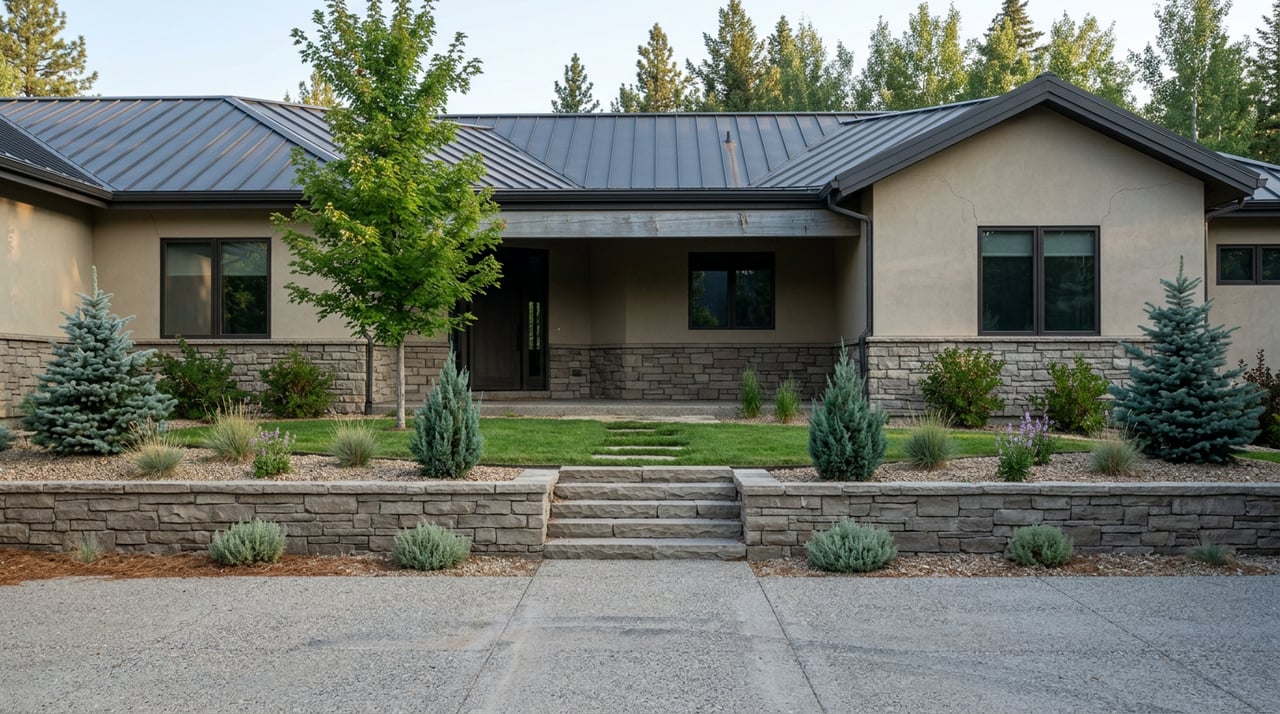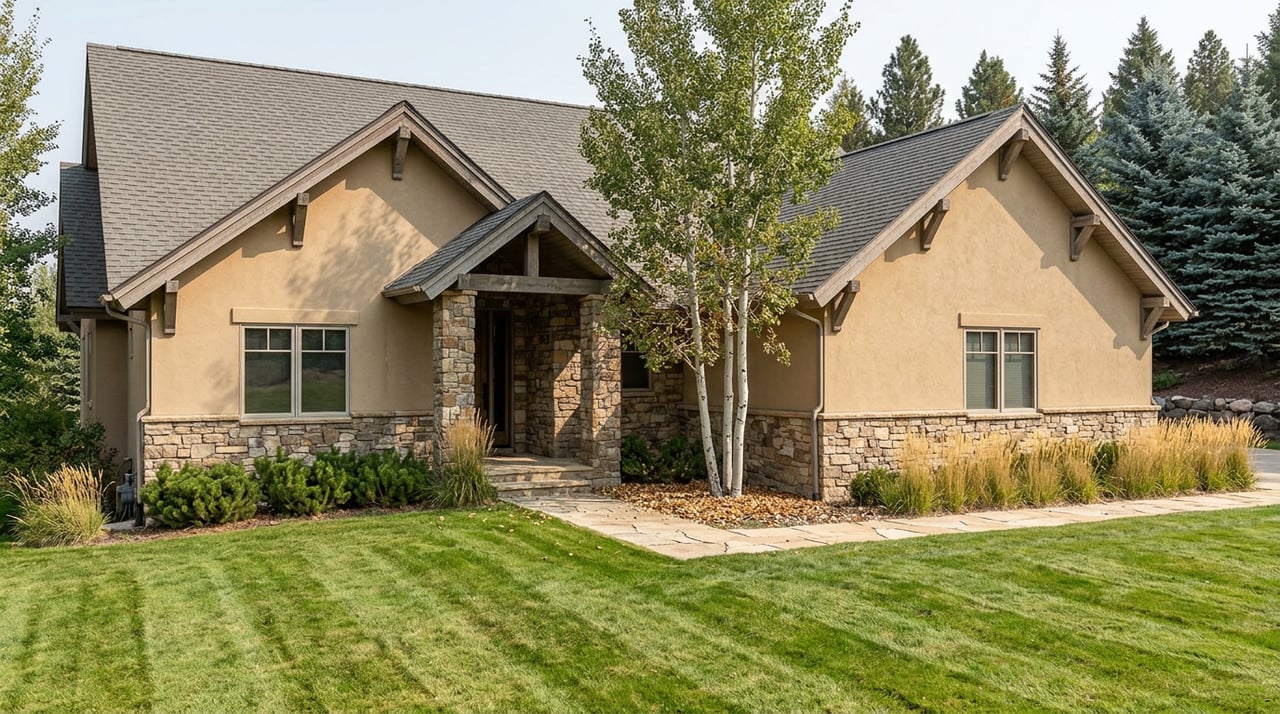
A buyer touring a full-acre lot in Alpine tends to arrive with a Utah assumption already baked in: secondary water is the cheap stuff, a flat add-on that barely moves the monthly budget compared to a culinary bill. That assumption holds in a lot of Utah County. It does not hold in Alpine, where the irrigation bill is not a flat fee at all. It is a formula, and the parcel's own size is one of the numbers plugged into it.
That distinction matters most for exactly the kind of property Alpine is known for: the half-acre and full-acre lots with room for mature trees, pasture, and the kind of yard that drew people to this foothill town in the first place. On a smaller in-town lot, the difference is a rounding error. On the larger parcels, it is a real line item that belongs in the offer math, not a surprise that shows up in August.
What the Bill Actually Multiplies
Alpine City's own utility billing page lays out the mechanics plainly. Pressurized irrigation, the pipe that waters the lawn and never touches a faucet, carries a base charge every month of the year, whether the system is running or shut off for winter. On top of that base charge, the city meters actual usage and prices it using three separate inputs: the calendar month, the water used, and the lot size pulled straight from the Utah County parcel map.
That third input is the one most buyers never see coming. It means the same household with the same watering habits pays a different rate depending on whether the address sits on a quarter acre or a full acre, because the city's own billing structure is built to scale with the ground being irrigated, not just the water leaving the sprinkler head. The city's own conservation messaging says as much directly: smaller quarter-acre lots are expected to irrigate for fewer hours than the larger one-acre lots common around town. The billing formula and the watering guidance are built around the same premise. Bigger lot, bigger number, by design.
The Restriction Sitting on Top of the Bill
That formula would be worth knowing in any year. It matters more right now because of what Alpine City told residents in April 2026: a historically low snowpack combined with unusually high winter temperatures means the city needs a minimum 25 percent cut in outdoor water use compared to the prior year. Since Alpine's secondary supply depends heavily on runoff, a light snow year translates directly into a tighter irrigation season, not just a suggestion to conserve.
The city backs that request with an actual schedule. Watering runs on an odd and even address rotation, three nights a week, with the window running from 7 p.m. to 7 a.m. Residents who ignore the schedule do not just get a strongly worded letter. The city's posted enforcement structure escalates from a warning to a $50 fine on the second offense to a $200 fine on the third and beyond, and a repeat violation can get the pressurized irrigation valve physically locked until the fine is paid. For a buyer accustomed to a culinary-only system where the worst-case outcome of overwatering is a bigger bill, that is a different risk profile entirely: get flagged enough times and the yard simply stops receiving water until the account is settled.
Bigger Lot, Bigger Number, Fewer Comparisons Than You'd Expect
Alpine is not the only Utah County city metering secondary water, but it is not the norm either. A regional comparison of pressurized irrigation billing across the county shows a real split in how neighboring cities handle the same utility.
| City | Billing model |
|---|---|
| Alpine | Metered, tiered rate that varies by month, usage, and lot size |
| Bluffdale, Herriman, Salem, Santaquin, Springville | Metered, per-1,000-gallon tiered rates |
| Riverton, Highland, American Fork, Pleasant Grove | Flat monthly fee based on lot size, several transitioning toward metering |
| Holladay | Supplied by private ditch companies rather than the city |
That split will not last. Utah Code now requires every secondary pressurized connection in the state to be metered by January 1, 2030, so the flat-fee cities on that list are on a clock. Alpine already did that work years ago, which means the metering transition itself is not a future risk here the way it is in some neighboring cities. What is still moving is the rate structure layered on top of the meter, and that is worth watching for a different reason.
Where the Money's Going
Alpine seated a new Water Citizen Advisory Committee in February 2026, tasked with reviewing both culinary and pressurized irrigation policy going forward. That committee is not being formed in a vacuum. The city's April 2026 council agenda shows the pressurized irrigation fund balance has already dropped because of infrastructure work tied to the Canyon Crest Road project, and the same meeting approved real dollars for well maintenance: electrical work on the 300 North Well and a new pump and equipment package for the Busch Well. None of that is unusual maintenance spending for a city running its own water system, but it is the kind of detail that tends to precede a rate conversation rather than follow one.
None of this means rates are about to spike. It means the formula a buyer is budgeting against today, tied to month, usage, and lot size, is being actively reviewed by a committee that did not exist a year ago, on a system that is currently spending down its own fund balance on well repairs. That is worth knowing before locking in a long-term budget for a larger property, not because the number will necessarily change, but because the people setting it are actively looking at it right now.
Before You Write the Offer
For anyone looking seriously at a larger Alpine lot, a few steps turn this from a surprise into a known cost:
- Pull the last 12 months of pressurized irrigation bills for the specific address, not a citywide average. The lot-size variable means a neighbor's bill tells you very little.
- Run the address through the city's online bill estimator before finalizing an offer, especially on anything over half an acre.
- Ask the seller directly whether the account has any unpaid fines or a history of watering-schedule violations that could mean a locked valve at closing.
- Confirm the property's parcel size on file with Utah County matches what you expect, since that figure feeds the billing formula directly.
A Few Direct Questions
Does the pressurized irrigation account transfer automatically at closing? It is a city utility account tied to the address, not a private water share, so it moves with the property the way a culinary account does. Confirm the account is current and free of violations before closing rather than assuming a clean handoff.
Is this the same thing as water shares I've heard about elsewhere in Utah? No. Water shares are stock in a mutual irrigation or canal company and often do not transfer with a deed unless the contract specifically says so. Alpine's pressurized irrigation is a municipal utility billed directly by the city, which is a simpler transfer but still worth verifying account by account.
Will the 2026 drought restrictions carry into next year? The city has tied this year's 25 percent reduction target to a specific low-snowpack winter. Whether that restriction eases depends on next winter's snowpack, which is not something any buyer or seller can predict from a listing sheet.
Does the lot-size factor apply the same way to every property, including newer construction? The billing page describes lot size as pulled from the county parcel map for every metered account, so newer builds are not exempt from the same three-factor formula.
Alpine's water bill rewards the buyer who asks the specific question about the specific address, not the one who assumes a statewide rule of thumb applies here the way it might one town over. If you are weighing a larger lot in Alpine, or trying to understand what a property's true carrying costs will look like across a full irrigation season, Sue Ann Wilkinson can walk through the numbers for that address before you write anything. Request a Complimentary Market Consultation to get started.