If your Cottonwood Heights subdivision has a CC&R clause banning secondary living units, that clause has been unenforceable in one specific way since 2021, and a lot of homeowners association boards still haven't updated their paperwork to reflect it. The Utah legislature passed a law that quietly stripped private HOAs of the power to block a category of housing addition, and local reporting at the time flagged it as touching at least a dozen HOA-governed neighborhoods inside city limits.
For anyone selling a Cottonwood Heights home and weighing whether a basement apartment adds real value before listing, or buying one and trying to read the CC&Rs correctly, the line between what the state controls and what your HOA still controls decides the entire project. Get the distinction backward and you either walk away from value you were entitled to add, or you assume a right you don't actually have.
What the Legislature Actually Changed
House Bill 82, the Single-Family Housing Modifications act, required Utah cities to treat certain accessory dwelling units as a use property owners are entitled to build, not a discretionary favor a city council could deny case by case. Cottonwood Heights had to rewrite its own code to comply. On September 21, 2021, the city council voted unanimously to enact Chapter 19.75 of the municipal code, formally Ordinance 368, a motion made by Councilmember Scott Bracken and seconded by Councilmember Doug Peterson.
The part of the bill that caught HOA attorneys off guard was narrower than the headline. It didn't just bind cities. It also barred private homeowners associations from using their CC&Rs to prohibit these units, overriding contracts that some Cottonwood Heights communities had relied on for decades. City Attorney Shane Topham said as much when the council took up the ordinance:
This is the legislature undercutting contracts that have already been made. It will lead to some litigation.
That prediction matters for anyone reading a CC&R packet today. A restriction that looked airtight when it was recorded may no longer hold up, and the packet itself won't tell you that.
Internal vs. Detached: The Distinction That Decides Your Project
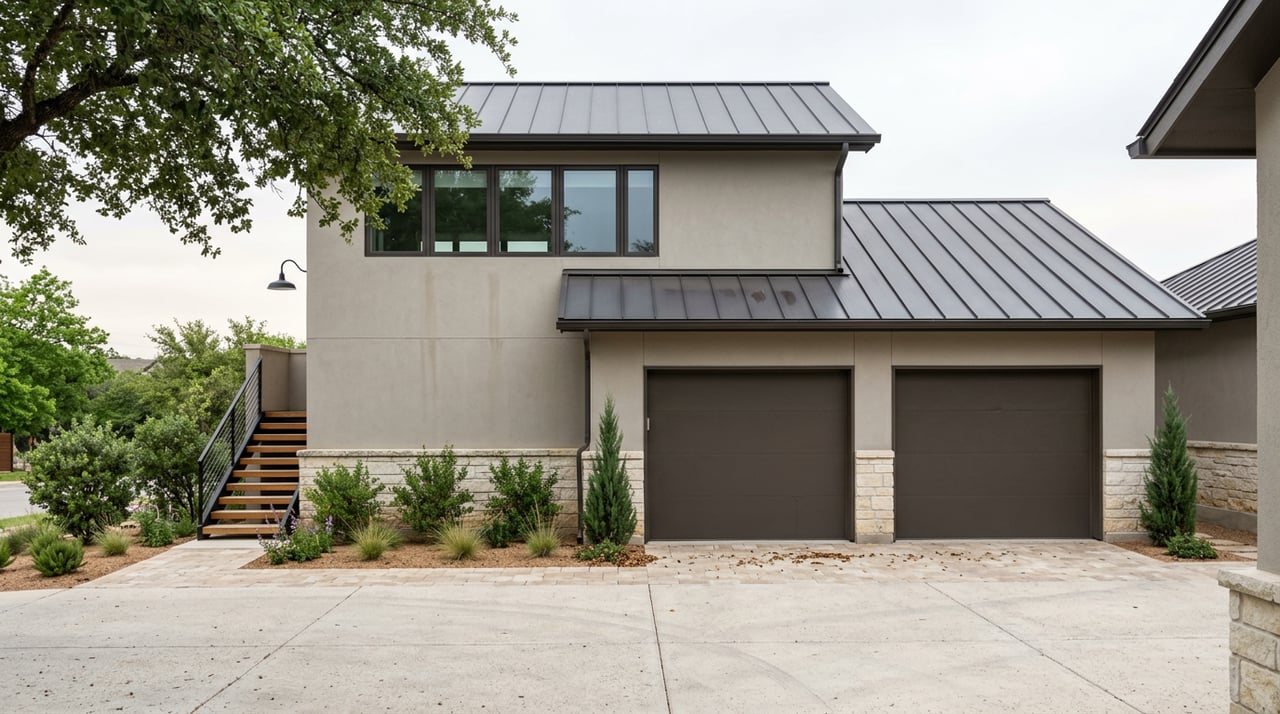
The override only applies to one kind of ADU. Internal ADUs, the kind built within a home's existing footprint like a finished basement, are the units the legislature forced cities and HOAs to allow. Detached ADUs, garage apartments, backyard cottages, converted outbuildings, were left out of the state mandate entirely. Cottonwood Heights still regulates those as a conditional use, which means a public process and neighbor input, not an automatic approval, and an HOA's restriction on a detached structure may still be enforceable where the same restriction on a basement apartment is not.
Here's how the two paths compare inside Cottonwood Heights today:
| Internal ADU | Detached ADU | |
|---|---|---|
| Zoning status | Permitted use on qualifying lots | Conditional use, city discretion applies |
| Eligible zones | R-1, RR-1, F-1 | R-1, RR-1, F-1 |
| Minimum lot size | 6,000 sq. ft. or more | Not specified separately; confirm with city planning |
| Parking | Baseline 2 off-street stalls required citywide | 2 additional stalls beyond baseline; tandem stalls don't count |
| Owner-occupancy | Required, proven by affidavit | Required, proven by affidavit |
| Short-term rental use | Prohibited under code 19.75.050.B | Prohibited under code 19.75.050.B |
| HOA CC&R enforceability | Cannot legally block, per state law | May still be restricted by CC&Rs |
The parking math alone is worth sitting with. A homeowner adding a basement apartment still has to meet the city's standard two-stall requirement that applies to every single-family lot, ADU or not. Add a detached unit instead, and the math changes to four stalls total, none of them stacked. That's a real cost and design constraint that a lot of first-time ADU planning skips past.
The Dozen-Plus Neighborhoods This Actually Touches
Local reporting on the ordinance at the time noted the state override could directly affect at least a dozen HOA-governed neighborhoods within Cottonwood Heights whose CC&Rs restrict secondary units. That's not a hypothetical. It means a meaningful share of the association paperwork circulating in Cottonwood Heights closings right now contains language on internal ADUs that the seller's own HOA can no longer enforce, whether the board has updated its documents or not.
What This Means If You're Selling
If you own a home inside an HOA and you're considering finishing a basement into a legal ADU before you list, your association's CC&Rs likely can't stop you, as long as your lot sits in an R-1, RR-1, or F-1 zone and meets the 6,000 square foot minimum. That's a genuine value-add conversation worth having before you set a list price, particularly for buyers weighing rental income or space for aging parents.
A few things worth confirming before you promise anything to a future buyer:
- Verify your zone and lot size through the city's zoning map rather than assuming
- Set up the required pre-application meeting with Cottonwood Heights planning staff before you draw plans
- Have the owner-occupancy affidavit ready, since the city requires the record owner to occupy either the main house or the ADU
- Budget for the parking requirement, since it applies whether or not you ever add a unit
An unfinished basement marketed as "ADU potential" is a promise. A basement with an actual permit on file is proof, and it's the version that survives a buyer's due diligence.
What This Means If You're Buying
The reverse due diligence matters just as much. Before you write an offer on a Cottonwood Heights home with an existing basement apartment or a garage conversion, confirm the details rather than taking the listing description at face value:
- Ask whether the unit carries an actual permit under Chapter 19.75, not just a history of being rented informally
- Pull the HOA's CC&Rs, minutes, and financials, which sellers are required to provide, and read what they say about secondary units with the internal-versus-detached distinction in mind
- Check the lot's zoning designation yourself rather than assuming ADU potential transfers from a neighboring property
- Ask directly whether the unit has ever been advertised as a short-term rental, since city code prohibits that use for any ADU and a violation can follow the title
A restriction that reads as settled in a CC&R document is not always settled in practice, and a unit that's been quietly rented for years is not the same thing as a unit the city has actually approved.
Common Questions
Does the HOA override apply to condominiums? No. The state law and the Cottonwood Heights ordinance apply within the city's single-family zoning districts, R-1, RR-1, and F-1. Condominium regimes operate under a separate legal framework.
Can my HOA still fine me over a detached structure? Possibly. Because the state override was written around internal ADUs, a CC&R restriction on a garage apartment, backyard cottage, or similar detached structure may still hold, and the city's conditional-use process still gives neighbors a formal chance to weigh in.
What if a basement apartment was built years ago without a permit? An HOA restriction being unenforceable doesn't retroactively make an unpermitted unit legal. The current process, including the owner-occupancy affidavit, applies to new applications, so an existing unpermitted unit still needs to go through it.
Details like this rarely show up on a listing sheet, and they're exactly the kind of thing that changes a negotiation when they surface at inspection or in escrow instead of before an offer goes in. If you're trying to figure out what a Cottonwood Heights property's zoning and HOA documents actually allow, or whether an ADU is worth adding before you list, Sue Ann Wilkinson has been walking local buyers and sellers through this kind of detail since 2004 and offers a complimentary market consultation to talk through what your specific lot and HOA actually permit before you sign anything.