If you are dreaming about building a custom home in Alpine, it is easy to fall in love with a view lot and assume the rest will work itself out. In reality, buying land here is less about finding a parcel for sale and more about confirming that the lot is truly buildable under Alpine’s zoning, site, access, drainage, and utility rules. A smart plan upfront can save you time, money, and frustration, so let’s walk through what matters most before you buy.
Why buildability matters in Alpine
In Alpine, vacant land is a parcel-by-parcel decision. A lot may have road frontage or even an address, but that does not automatically mean you can build the home you want.
The city’s Planning and Zoning Department oversees development through staff review, the Planning Commission, and the City Council. Alpine also maintains maps for flood plain, fault hazard, rock hazard, slide hazard, land use, zoning, and trail planning, which makes early due diligence essential.
Start with zoning and lot status
Before you focus on house plans, confirm how the parcel is zoned and whether it is already a legally recorded lot. Those two details can shape everything from lot size expectations to setbacks and the approval path ahead.
Alpine’s General Plan identifies five core residential land categories: TR-10,000, CR-20,000, CR-40,000, CE-5, and CE-50. In broad terms, TR-10,000 is the higher-density town-center area, CR districts are lower-density residential areas, and CE-5 includes mountainous, very low-density land influenced by steep slopes and other sensitive conditions.
Key lot standards to review
For clustered or planned residential development, Alpine code sets minimum lot sizes and buildable-area standards. These rules can affect whether a lot will support the footprint and layout you have in mind.
- In CR-20,000, minimum lot size is 10,000 square feet
- In CR-40,000, minimum lot size is 20,000 square feet
- In CE-5, minimum lot size is 20,000 square feet
- Each lot must have a minimum designated buildable area of 5,000 square feet
- Typical setbacks are 30 feet front, 30 feet rear, and side-yard setbacks totaling 30 feet, with at least 12 feet on one side
- Building height is capped at 34 feet, except in CE-50 where the cap is 25 feet
These numbers matter because a large parcel does not always translate into a large usable building envelope. Setbacks, slope, and sensitive-land constraints can reduce what is actually practical.
Recorded lot or future subdivision?
If the parcel is not already a recorded lot, your next question is whether the property would need subdivision approval. Alpine defines a minor subdivision as three or fewer lots, while a major subdivision follows a more layered process.
That distinction can affect timing, cost, engineering requirements, and risk. If you are buying land with the intention to split it or create a buildable homesite, you will want clarity on that before closing.
Review hazards and sensitive-land overlays
One of the biggest mistakes buyers make is assuming that a lot is build-ready just because it looks usable from the street. In Alpine, site conditions can change the answer quickly.
The city uses overlay zones to protect hillsides, scenic views, critical lands, and its rural small-town character. Sensitive Lands overlays are designed to limit topographic alteration and reduce encroachment into floodplain, wildland-urban interface areas, geologic-hazard zones, and hillside areas.
Parcel-level hazards can affect design
Alpine specifically identifies issues such as:
- Surface fault ruptures
- Landslides
- Debris flows
- Rock fall
- Soil liquefaction
- Slope instability
- Erosion
- Wildfire hazard
Because the city provides maps for debris, fault, flood plain, rock, and slide hazards, due diligence needs to happen at the parcel level. You do not want to rely only on the neighborhood name or nearby home values when evaluating land.
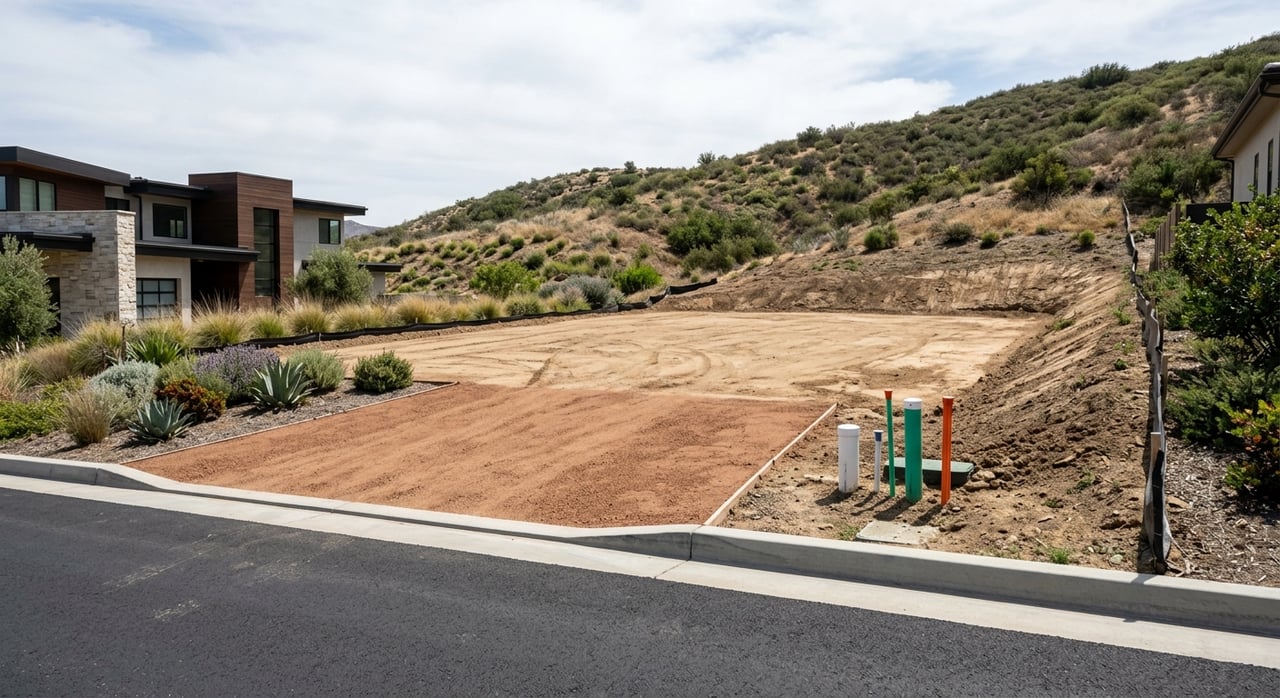
Check slope, drainage, and engineering needs
Topography is one of the most important parts of buying land in Alpine. What looks like a beautiful bench or hillside setting may come with design limits and extra engineering.
Alpine’s site-plan instructions require 2-foot contour mapping, drainage patterns, and retention design. The city requires drainage to move away from the structure, retention of the first 0.53 inches of rainfall onsite, storm-drain calculations, and drainage plans stamped by a Utah-licensed professional engineer.
Slope can limit buildability
For CR-20,000 and CR-40,000 lots, Alpine notes that parcels with an average slope greater than 25 percent are considered non-buildable. That is a major issue for foothill and mountainside buyers.
This is why a visual walk of the property is not enough. A survey, contour information, and site-specific professional review can give you a much clearer picture of what the land can realistically support.
Geotechnical review comes early
Before a building permit is issued, Alpine requires a geotechnical report from a soils engineer. The city also requires an excavation observation report before footing installation.
Retaining walls and slope-related improvements may trigger separate permits and additional engineering, especially in sensitive lands or where easements are involved. If your ideal lot needs grading or retaining work, that should be part of your early budget planning.
Confirm utilities and access before you buy
A custom-build lot is not just about the homesite. You also need to know how the property will be served and accessed.
Alpine City provides culinary water, pressurized irrigation, sewer, garbage, and storm drain services. The city directs residents to Rocky Mountain Power for electricity and Enbridge Gas for gas service, and new utility customers must open an account and sign a pressurized irrigation agreement.
Sewer and infrastructure details matter
Alpine’s sewer code requires a piped sanitary sewer system to the property line of every lot in a subdivision. If sewer lines are built outside the street, the code requires a 20-foot easement and a 12-foot all-weather access road capable of bearing 70,000 pounds.
Those are not minor details. They can influence lot layout, engineering, and whether a parcel is practical for development.
Access can shape approvals
The city’s subdivision street code addresses stub streets, right-of-way widths, secondary access, cul-de-sacs, and driveway access to arterials. In wildland-urban interface areas, developments generally need more than one access route, unless terrain makes a second access impractical.
If you are considering land in a more elevated or tucked-away setting, access review should happen early. A stunning lot is far less appealing if access requirements complicate or delay approval.
Understand wildland-urban interface rules
Some Alpine parcels fall within the wildland-urban interface, often called the WUI. If your lot is in one of these areas, wildfire-related requirements may become a key part of the planning process.
Alpine’s WUI development guide says a fire protection plan may be required. That plan must be based on a site-specific wildfire risk assessment that considers location, topography, aspect, flammable vegetation, climatic conditions, and fire history.
The city’s guidance also emphasizes ignition-resistant construction, defensible space, and fire-access design. For buyers planning a luxury custom home, this can influence architecture, materials, landscaping, and site layout from the very beginning.
Plan for Alpine’s approval timeline
Even when you find the right lot, timing is not always quick. Alpine has a defined review process, and larger or more complex projects can take additional time.
The city holds a Development Review Committee meeting every Monday at 9 a.m. Alpine advises prospective developers to attend before moving forward, which can be a valuable early step if you are evaluating a parcel or project concept.
If the lot needs subdivision approval
For a major subdivision, the concept plan, preliminary design plan, and final plat each have at least 14-day submittal deadlines before the relevant Planning Commission meeting. After final plat approval, Alpine requires engineer review, a Water Letter and Bond Letter, possible city-attorney review, City Council action, and county recording before construction can begin.
A preconstruction conference is then held with city staff and the subdivider. This process is manageable, but it is not casual, so expectations matter.
If the lot is already platted
For a single custom home on an existing buildable lot, the process still starts with a site plan. Alpine requires approval from the City Planner, Fire Marshal, Public Works Director, and City Engineer before the building permit application is accepted.
The city also states that all structures require a building permit, excavation before permit issuance is prohibited, and a Land Disturbance Permit must be completed before the building permit is issued. In some cases, a certified survey may also be required at footing inspection to confirm the foundation is placed in conformance with zoning rules.
Know the construction standards early
Your architect, builder, and engineers need to account for Alpine’s residential design criteria from the start. These standards affect structural planning, material choices, and construction budgets.
Alpine lists a 30-inch frost line, 1,500 psf assumed soil bearing pressure, seismic zone 3, 115 mph basic wind speed, and a 45 psf roof snow load. Those numbers may sound technical, but they matter because they influence foundation, framing, and roofing decisions long before construction begins.
Build the right team before closing
Buying land in Alpine usually calls for more than a standard home purchase approach. The strongest buyer team often includes:
- A local buyer’s agent
- A surveyor
- A geotechnical engineer
- A civil or stormwater engineer
- A builder
- An architect or home designer
That team can help you verify zoning, overlay status, buildable area, utilities, access, easements, and whether the parcel is already a recorded lot or still subject to subdivision approvals. The goal is simple: avoid surprises after you own the land.
What a smart Alpine land buyer does
If you want a practical way to evaluate a lot, focus on a short checklist before you commit:
- Confirm zoning and lot status
- Review hazard and overlay maps
- Verify slope and buildable area
- Investigate drainage and stormwater requirements
- Confirm sewer, water, irrigation, gas, and power access
- Review access, easements, and road standards
- Ask whether WUI rules apply
- Understand the approval and permit timeline
- Assemble the right professionals early
In a market like Alpine, careful due diligence is not overkill. It is what helps you move forward with confidence.
If you are considering a custom-build lot and want experienced guidance through the land-buying process, Sue Ann Wilkinson can help you evaluate opportunities, ask the right questions, and make a confident move.
FAQs
What should you check before buying land in Alpine, Utah?
- You should confirm zoning, recorded lot status, buildable area, hazard overlays, slope, drainage requirements, utilities, access, easements, and whether subdivision approval is still needed.
Are all vacant lots in Alpine, Utah buildable?
- No. In Alpine, buildability depends on parcel-specific factors such as zoning, sensitive-land overlays, hazard status, drainage, access, and permit review.
How does slope affect a custom-build lot in Alpine?
- For CR-20,000 and CR-40,000 lots, Alpine states that parcels with an average slope greater than 25 percent are considered non-buildable.
Do you need engineering reports to build on land in Alpine, Utah?
- Yes. Alpine requires site-plan information such as contour mapping and drainage design, and it requires a geotechnical report before a building permit is issued.
What utilities should you verify for an Alpine custom-build lot?
- You should verify culinary water, pressurized irrigation, sewer, storm drain service, electrical access, and gas service, along with any related easements or infrastructure requirements.
How long does it take to get land or lot approvals in Alpine?
- The timeline depends on whether the parcel is already platted or still needs subdivision approval, but Alpine’s review process includes scheduled committee and commission steps that can add time for more complex projects.